












eyeseva.in

What is Cataract ?

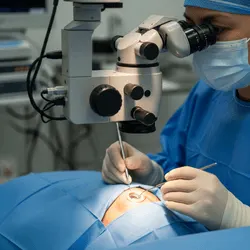
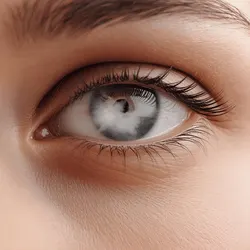
Cataract Surgery is a safe and effective procedure to treat Cataract, a condition where the Eye’s natural Lens becomes cloudy, causing blurred or dim vision. During the surgery, the cloudy Lens is removed and replaced with a clear artificial Lens called an Intraocular Lens (IOL). This allows light to properly focus on the Retina, restoring sharp and clear vision. The surgery is usually quick, performed on an outpatient basis, and has a very high success rate. Most patients notice significant improvement in vision within a few days, making Cataract surgery one of the most common Eye treatment worldwide.

Cataract eye

Symptoms of Cataract

Cloudy Eye lens

Cloudy Eye lens

Blurry Vision

Blurry Vision

Halos Surrounding Light

Halos Surrounding Light

Sensitivity to Glare

Sensitivity to Glare

Double Vision

Double Vision

Poor Night Vision

Poor Night Vision

Causes of Cataract

  • The natural aging process is the leading cause of Cataract, as the Eye’s Lens gradually deteriorates over time.
  • Various health conditions, including daibetes, kidney disease, glaucoma, smoking, Eye injuries, infections or Eye inflammation can also lead to Cataract formation.
  • Long -term use of certain medications may further increase the risk of Developing Cataract.
Aging

Aging

Smoking and Alcohol

Smoking & Alcohol

UV Radiations

UV Radiations

Obesity

Obesity

Diabetes

Diabetes

Hypertension

Hypertension

Treatment

  • Surgery as the only solution : Cataract can not be treated with medicines or Eye drops. Once the natural Lens becomes cloudy, only surgical replacement can restore vision.
  • High safety and success rate : Cataract surgery is one of the safest procedures worldwide, with the majority of patients achieving improved vision afterward.
  • Core principle of treatment : The procedure involves removing the cloudy natural Lens and implanting a clear artificial Intraocular Lens (IOL)
  • Key decisions before surger : Patients and Doctors must decide on three important factors – the surgical method, the type of IOL to be implanted and appropriate timing for the operation.

Types of Cataract Surgery

There are various technologies and basic techniques for Cataract surgery as –

Traditional Cataract Surgery


This process is performed manually, where a Surgeon uses a scalpel to make an incision in the cornea. The Cataract is then broken down into smaller fragments, which are carefully removed through suction. Since stitches are required, the healing process is slower and recovery takes more times compared to advanced techniques.

Phacoemulsification


This is the most widely used and advanced techniques for Cataract removal. In Phacoemulsification, an ultrasonic device is used to break the Eye's cloudy natural Lens into tiny fragments. These fragments are then gently suctioned out, and a clear artificial Lens is implanted in its place.

MICS


This technique, known as Micro Incision Cataract Surgery (MICS), is similar to Phacoemulsification but differs mainly in the size of the incision. Instead of the 3.2 mm cut used in traditional surgery, MICS requires only a 1.5 mm incision. The smaller cut makes the procedure safer, as surgical outcomes are closely linked to incision size. With this approach, patients generally experience faster recovery and better visual results.

Robotic Surgery (Bladeless Femto Laser Cataract surgery)


This advanced form of Cataract surgery represents the highest level of technology in the field. It uses computer guided precision and laser energy to carry out the procedure.  A specialized device called LENSAR is employed to fragment the Cataract, while the  Femtosecond Laser creates precise corneal incisions to access and treat the Lens.

Basis
Traditional Cataract surgery
Latest Cataract surgery
Use of Blade
Surgeon practices blade to create a hole in the Eye for surgery
No use of the blade in laser surgery as everything is through machines & computers
Time is taken in surgery
The procedure take about 20-30 minutes per Eye
The procedure take s less than 5 minutes
Blade-free
Its not !00 blade free surgery
It is 100% blade-free with No pain & stitches during surgery
Risk
It is slightly computer controlled but has lots of risk factors
The existence of an OPC is never dependent on the Nominee or Director. Can be dissolved by Regularities Authorities

Benefits of Cataract Surgery

Clear and sharp vision

Clear & sharp vision

Improves Night vision

Improves Night vision

Quick and safe Recovery

Quick & safe Recovery

Confidence and Quality of Life

Confidence & Quality of Life

Long Lasting Results

Long Lasting Results

Safest and most effective

Safest & most effective

Cataract surgery Lens Options

During Cataract surgery, an artificial Lens (IOL) is implanted to replace the cloudy natural Lens. The type and quality of the IOL are crucial in  determining the clarity of vision after surgery. Listed below are some of the main Lens options available –

Monofocal Lens


A Monofocal Lens is the most widely used option in Cataract surgery. It provides a single focal point, usually offering clear distance vision. However, patients may still require Glasses for tasks that involve near vision, such as reading

Multifocal Lens / Bifocal Lens


Multifocal Lenses offer an advantage over Monofocal Lenses by enhancing both distance and near vision. Many of these Lenses include advanced features such as blue light filters, computer-use support and anti-PCO rings. However, they are not suitable for all patients, as they may lead to increased glare and reduced contrast sensitivity compared to Monofocal or Toric Lenses

Trifocal Lens


Trifocal Lenses are an advanced version of Multifocal Lenses, designed to provide clear vision at all three ranges - distance, intermediate (computer use) and near. They are equipped with specialized filters that help reduce Eye strain from prolonged computer work. In addition, many Trifocal Lenses include modern features such as blue light filters, anti-PCO rings and even Toric options for patients with astigmatism.

Toric Lens


 Toric Lenses are designed to correct not only distance and near vision but also cylindrical power, making them effective in treating Astigmatism. Unlike Multifocal Lenses, they generally do not cause glare related issues. while Toric Lenses significantly improve distance vision and Astigmatism, patients mat still require Glasses for close-up activities such as reading, writing or detailed work.

Edof Lens


An Extended Depth of Focus (EDOF) Lens offers sharp vision for both distance and intermediate ranges, helping reduce reliance on Glasses. It provides smoother transitions between focal points, improved contrast sensitivity and fewer halos compared to Multifocal Lenses, thereby  enhancing overall visual comfort and quality of life. Glasses may still be needed only for near tasks such as reading.

Cataract Lens Name & Features

Lens Brand
Lens Type
Possible Correction
Requirement of Glasses Post-surgery
Acriol (Care) Indian
Monofocal
Distance only
For Computer & Reading
Hoya 150 ( Hoya) Japan
Monofocal
Distance only
For Computer & Reading
Clareon (Alcon) USA
Monofocal
Distance only
For Computer & Reading
Tecnis Eyhance (J&J) USA
Monofocal + Depth of Focus ( EDOF)
Distance + Intermediate
For Reading
Hoya Impress (Hoya) Japan
Monofocal + Depth of Focus (EDOF)
Distance + Intermediate
For Reading
Magnificent (Care) Indian
Monofocal + Extended Depth of Focus (EDOF)
Distance + Intermediate + Some Near
For Fine Print Reading only
Lux Smart (B & L) USA
Monofocal + Extended Depth of Focus (EDOF)
Distance + Intermediate + Some Near
For Fine Print Reading only
Vivity (Alcon) USA
Monofocal + Extended Depth of Focus (EDOF)
Distance + Intermediate + Some Near
For Fine Print Reading only
Panoptix (Alcon) USA
Trifocal
Distance + Intermediate + Near
No Need of Glasses
iDIFF Plus
Bifocal (Multifocal)
Distance + Near
For Driving
AcriDIFF
Bifocal (Multifocal)
Distance + Near
For Driving
Naturo
Panfocal Lens
Distance + Intermediate + Near
No Need of Glasses
Acrivision Alcon
Monofocal
Distance only
For Computer & Reading

RealFact

cataract

Proud to Have

0 +

Happy Patient

0 +

City Covered

0 +

Doctors

0

Awards Winning

Frequently Asked Questions

Cataract surgery is a widely performed procedure that removes the eye’s cloudy natural lens and replaces it with an artificial intraocular lens (IOL). During the operation, a tiny incision is created, the cataract is fragmented using ultrasound technology, and the IOL is implanted. This restores sharp, clear vision.

People whose cataracts interfere with their eyesight and everyday tasks, may be suitable for cataract surgery. An eye specialist will examine your vision and overall eye condition to decide if the procedure is required.

Several types of IOLs are available, such as monofocal, multifocal, and toric lenses. Monofocal lenses offer clear vision at a single distance, whereas multifocal and toric lenses address more than one vision problem.

Cataract surgery is usually a quick procedure, taking about 15 to 30 minutes for each eye.

Bed rest is not required. While vision improves right after surgery, your Doctor will recommend specific precautions and medications for about a week.

Cataract surgery is typically done on one eye first, with the second eye treated a few weeks later. This method reduces risks and supports proper healing and visual adjustment.


Whether you’ll need glasses after surgery depends on the type of IOL chosen and your personal vision requirements. Some people enjoy clear near or distance vision without glasses, while others may still need them for certain activities.


Local anesthesia is applied to numb the eye, ensuring you don’t feel pain during the procedure. After surgery, you may notice slight irritation or mild itching.


Scroll to Top