eyeseva.in

What is Squint or Strabismus ?

A squint, medically known as strabismus, is a condition where the eyes are not aligned properly. In this situation, one eye may turn inward, outward, upward, or downward while the other eye remains focused on a single point. This misalignment can be constant or may occur intermittently. The problem arises because the extraocular muscles, which control eye and eyelid movement, do not function in coordination. As a result, both eyes fail to focus on the same object at the same time. To correct this misalignment and restore proper alignment, surgical treatment is often recommended as an effective solution.
Squint or Strabismus

Signs of Squint

Eye Fatigue

Eye Fatigue

Double vision

Double vision

Unclear vision

Unclear vision

Eye strain sensation

Eye strain sensation

Difficulty in Reading

Difficulty in Reading

Poor depth perception

Poor depth perception

Reasons Behind Squint

The exact causes of squint are not always clear. However, a small percentage of cases can be linked to certain contributing factors –

Hereditary

Hereditary

Refractive errors

Refractive errors

Poor vision in one Eye

Poor vision in one Eye

Cerebral plasy

Cerebral plasy

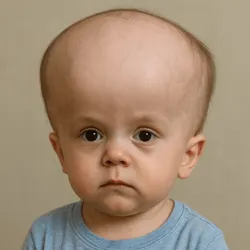
Hydrocephalus

Hydrocephalus

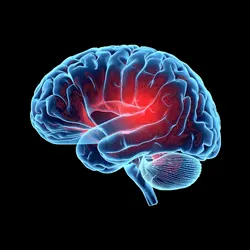
Brain Tumours

Brain Tumours

Stroke

Stroke

Head Injuries

Head Injuries

Neurological problems

Neurological problems

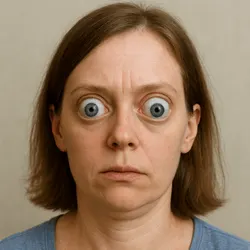
Graves disease

Graves disease

eye Infections

Infections

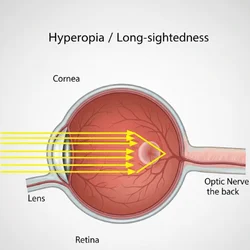
Long sightedness

Long sightedness

Squint Treatment Options

Eyeglasses or contact Lenses

These are commonly used by individuals with uncorrected vision problems. By wearing corrective lenses, the eyes don’t need to strain as much to focus, which helps them remain properly aligned.

Prism Lenses

These special lenses guide light correctly into the eye, improving focus and reducing unnecessary eye movement. By minimizing the effort required to align vision, they help the eyes work more comfortably and efficiently when looking at different objects.

Orthoptics (Squint Eye excercises)

This approach can be effective for certain kinds of strabismus, particularly in cases of convergence insufficiency, which is a type of Exotropia. It helps improve the ability of the eyes to work together and maintain proper alignment when focusing.

Medications

treatment may involve eye drops or ointments, and in some cases, botulinum toxin type A (like Botox) injections to relax an overactive muscle. These methods can be combined with surgery or used as alternatives, depending on individual needs.

Patching

When a patient has both strabismus and amblyopia (lazy eye), treatment for amblyopia is important. Enhancing vision in the weaker eye can also aid in managing eye misalignment, supporting better coordination and alignment between both eyes over time.

Eye muscle surgery

Surgical treatment involves altering the length or strength of the eye muscles to achieve proper alignment. It is done under general anesthesia, with dissolvable stitches. In some adults, adjustable strabismus surgery is offered, allowing post-surgery fine-tuning of muscle positioning.

Benefits of Squint Eye Treatment

Restored Vision

Restored Vision

Boosted Confidence

Boosted Confidence

Better Eye Coordination

Better Eye Coordination

Reduced Eye Strain

Reduced Eye Strain

Preventing Future Issues

Preventing Future Issues

Squint Treatment Exercises

Pencil Push Ups

Pencil push-ups are simple Eye exercises that help strengthen Eye coordination and improve focus. To practice, hold a pencil at arm’s length with the tip, eraser, or a letter clearly visible. Focus your Eyes on this point and slowly bring the pencil toward your nose while keeping the image single and clear. As soon as the object begins to blur or double, stop and hold that position briefly. Then, move the pencil back to the starting point and repeat. Practicing pencil push-ups regularly can train the Eyes to work together more effectively, reducing Eye strain and improving visual alignment.

Brock String

Take a 5-foot string with three differently coloured beads. Attach one end to a fixed point, like a handrail or the back of a chair, and space the beads evenly along the string. Hold the other end near your nose and shift your focus from bead to bead. When your Eyes are properly aligned, the bead you’re looking at will appear at the intersection of two overlapping strings, forming an X, while the other beads appear doubled. If the strings cross in front of or behind the bead, your Eyes aren’t focused correctly. Ensure you see the X at each bead, except the farthest one, which will form a V.

Barrel Cards

This exercise is beneficial for individuals with Exotropia, as it helps improve Eye alignment and coordination. Take a card and draw three red barrels of increasing size on one side, and three matching green barrels on the opposite side. Hold the card vertically against your nose, ensuring the largest barrel is positioned farthest away. Focus on the largest barrel until the red and green images merge into a single image, while the other two appear doubled. Maintain this focus for about five seconds. Repeat the same process with the middle barrel, and then with the smallest barrel for best results.

Frequently Asked Questions

Yes, a squint (strabismus) can be corrected in most cases. The treatment depends on the type, severity, and underlying cause of the squint.

Yes, in some cases a squint (strabismus) can be improved or corrected with eyeglasses. This usually works when the squint is caused by a refractive error, such as farsightedness (hyperopia). Glasses help the eyes focus properly, which can reduce or even eliminate the eye misalignment.

Squint (strabismus) can be corrected with surgery on the eye muscles to realign the eyes. The procedure is usually done under general anaesthesia.

Yes, squint (strabismus) surgery is generally considered safe, especially when performed by an experienced ophthalmic surgeon. It is a common procedure done in both children and adults.

Recovery after squint (strabismus) surgery is usually quite quick, but it can vary depending on age, overall health, and the type of procedure.

Squint (strabismus) surgery is not usually painful, because it is performed under general anaesthesia. This means you won’t feel pain during the operation.

Scroll to Top